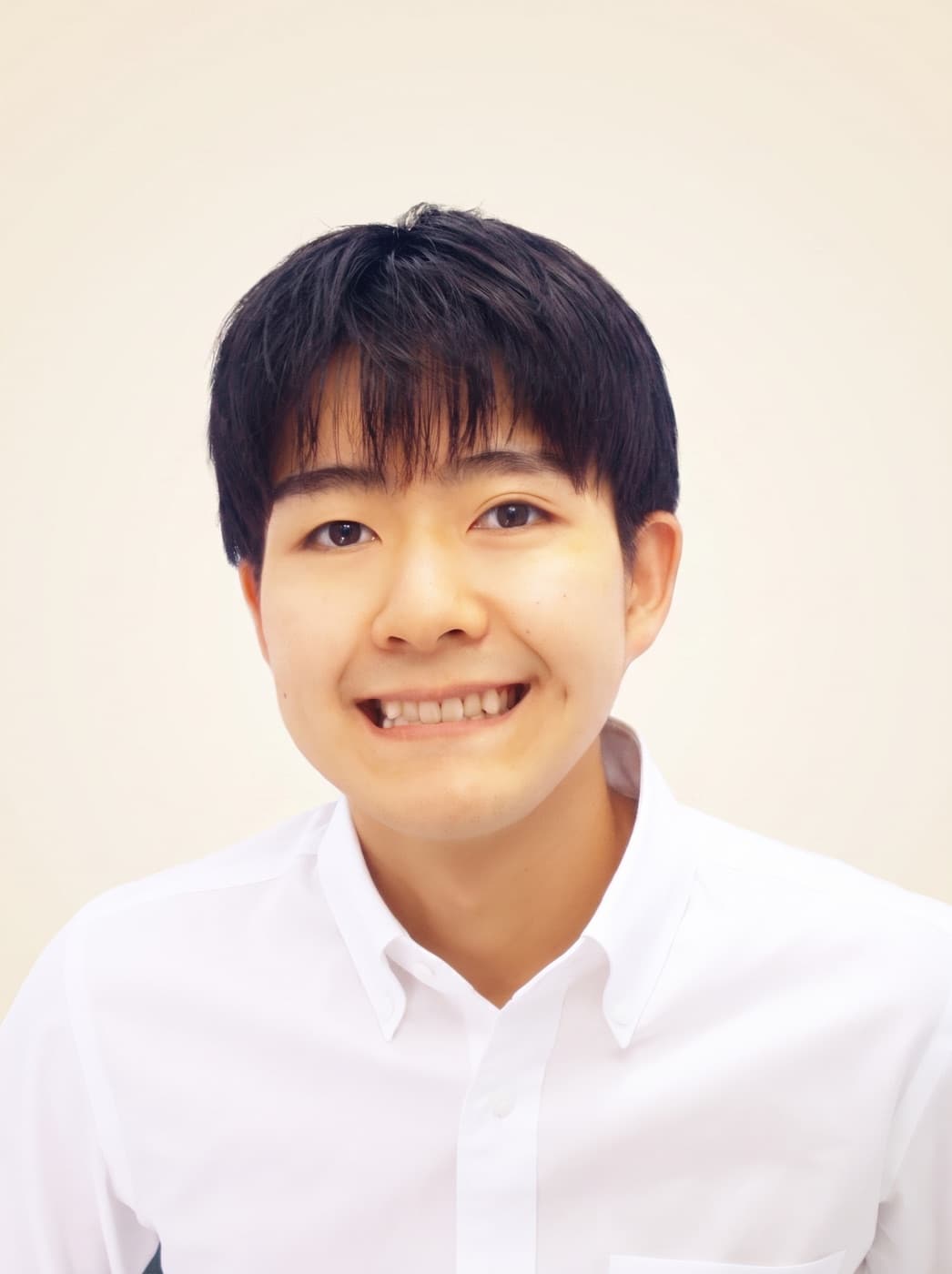
About
Returnee admissions,
to a medical faculty.
I sat the same exam you're sitting.
What it actually tests is something I know first-hand rather than second-hand. What I teach is the route I took myself.
Atsuto Deguchi
- Years in California
- 18
- University
- Tsukuba
- Teaching
- 8+ years
English acquired as a native speaker
School of Medicine, returnee admissions
in both Japan and the US
Why any of that
changes your lessons.
A credential listed for its own sake is worth nothing. Here are the three places this one actually shows up in the teaching.
I went through it as a candidate
Application documents, the essay, the interview. I can take you through the process in the order I met it myself rather than describing it from outside — including what gets weighed and what nobody is really looking at.
I cleared it at the hardest setting
Among returnee admissions routes, medicine is one of the most demanding places to land. The density of preparation that took is the standard I still teach to.
I lived between the two systems
Eighteen years studying in California, then competing in Japanese admissions. Moving between thinking in English and explaining in Japanese is exactly where returnees stumble, and I know that ground personally.
How I got here.
I spent eighteen years in California. English was not something I studied into place; it was the language I lived in. Whether that would count for anything in Japanese admissions turned out to be a separate question entirely.
What I came back to was the returnee admissions route. Being good at English and being able to write an answer a Japanese university rewards are two different skills, and closing that gap was work I had to do myself. It ended with a place at the University of Tsukuba School of Medicine.
I have been teaching for more than eight years now, in Japan and in the US. What became clear over that time is that returnee and international-school students stumble in patterned, predictable places. Because English can be processed on instinct, the thing that goes missing is being able to say why an answer is the answer. Exams aim precisely there.
So lessons here do not start with memorisation. They start with rules and procedures. Once you can explain it, the score follows.
What I commit to.
I say so when it isn't reachable
If the time left does not get you to a target, you will not hear that you will be fine if you work hard. What you get instead is a decision about where the winnable marks actually are.
Every lesson leaves a record
After each lesson you receive a written report: what we covered, where the weaknesses are now, and what comes next. Parents can follow progress straight from it.
You pay for hours taught
That is the whole price. No enrollment fee, no monthly charge, and none of the recurring administration fees some tutoring firms add.
Start with one free hour.
Run exactly like a real lesson. If lessons are not the stage you are at yet, start with a free consultation instead — email or Google Meet.
Book a free trial